Showing posts with label NATIONAL SOLIDARITY PARTY. Show all posts

Tuesday, 4 October 2016

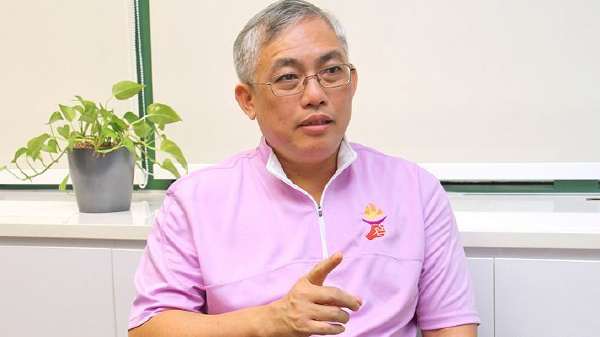
NEW INTERVIEW: My first interview with Gilbert Goh (Transitioning.org, ex-NSP, RP), 7/7/2016

My interview with Mr Gilbert Goh, CEO Transitioning.org NGO
Date: 7 July 2016 @ Block 808, Kitchener Complex, Singapore

Kieran James: Hi Gilbert, please give us some background about your own political activism and your NGO.

Gilbert Goh: We started off helping those unemployed; we also got involved in some activism four to five years ago about the population growth. Lately the political activism side has slackened or died down. By profession I’m a counsellor; I have done this for six or seven years. We are an NGO but because we got involved in activism we got called up [by the authorities]. I first went to the election in 2011 with NSP [National Solidarity Party] in Tampines GRC and the latest was last year 2015 in Ang Mo Kio GRC.

KJ: What is your comment about the contest in Tampines in 2011 looking back now in hindsight?

GG: We always thought that we would win. I think we had a good result, 42-43% [KJ note: actually 42.78%]. Mah Bow Tan was unpopular with his housing policy. We were all brand new and we got 42-43%. If WP [Workers’ Party] had put in a strong team they would have got a good result.

KJ: What was it like working with Goh Meng Seng in Tampines?

GG: He is a nice guy, very humble, very intellectual. I think he has to learn how to be diplomatic. He cut off a lot of supporters.

KJ: How are you feeling now about the 2015 election results?

GG: I have a little bit of resignation with the election results; it makes us think is it worth it the effort we put in; it makes us wonder if we should do it. We look at the election results as a yardstick. A lot of activists have given up such as Andrew Loh. As activists should we [still] voice out? Should we care about the result or no?

KJ: How was the ground sentiment this time compared to 2011?

GG: I think this time around the ground was a bit harder caused by the LKY [Lee Kuan Yew] death and the 50 years celebrations. This turned the tide back to PAP. The government gave the Pioneer Generation some tips and they tried to manage the unemployment. The opposition is quite disunited; we shoot ourselves in the feet; there are a lot of cons against the opposition. The PAP got into social media quite well; they have a team of IBs who really know how to stir trouble up. The whole IB team has dismantled now; they are not so active now. They really created a lot of havoc and distrust. The social media is the hallmark of opposition but they did a good job to smash us.

KJ: Do you feel opposition people are disenchanted now?

GG: Yes, they are discouraged. Dr Chee is someone who does not give up; they will push on. Tan Jee Say is very quiet.

KJ: Why did you leave NSP after the 2011 GE?

GG: We just joined for the election. People say it is a mole party; these are rumours.

KJ: What are some reasons for the 2015 GE result in your opinion?

GG: The LKY death had a big impact for the fence-sitters. In the last five years they converted some 80,000 – 90,000 new citizens and I think a large percentage would vote for PAP (80-90%).

KJ: The opposition has not reached out to the new citizens well?

GG: That is true. New citizens might think the opposition are all against them and they vote out of loyalty to PAP at least for the first election.

KJ: Do you think the election result is a one-off or a long-term trend?

GG: It is hard to say. We thought immigration and the cost of living would help with votes but they didn’t. Chee Soon Juan’s loss [Bukit Batok SMC 2016 by-election] was a setback; he only got around 39%. He is a good leader but he could not make the 40% mark. I don’t think we can go back to 60-40 the way things are. The 10-15% are fence-sitters. The next election may be 65-35, I hope I’m wrong. Aljunied GRC may be lost in the next election; they [PAP] just lost by 1,000 votes.

KJ: Aljunied was a symbol …

GG: PAP is winning over the youth. The PM is not sentimental; you have to salute him; he pushed out Lui Tuck Yew, the Transport Minister [2011-2015], just before the election; he did not know what was coming. The voters have confidence he will push out the underperformers. I don’t know who will be the next PM. A lot of us are looking for Tharman; I don’t know whether they will accept an Indian. If he is up there he will bring all the votes back to PAP. If there is a Chinese guy who is not so good it will be better for the opposition.

KJ: Do you think the pressure on WP about the town council accounts was fatal?

GG: They were successful in painting them as black as they could. They have control of the media and they used the town council issue to good effect in the last two years.

KJ: And I think one unspoken factor was the loss of Yaw Shin Leong who had been appointed the designated successor to Low Thia Khiang…

GG: I think Yaw Shin Leong was a big loss to WP; it shook the party up. He was voted the MP, one camp said. The other camp said he had to go. I think YSL’s departure has weakened the party. We expect so much from CSM [Chen Show Mao] but he is so quiet in Parliament; it’s quite sad [laughs]. Should we get involved? Is it a waste of time? There is a place for activism and we hope they can work together with the politicians but the activists do not trust the politicians. I think they [PAP government] will be around for a long time. Something might change I hope after LHL [Lee Hsien Loong] goes.
KJ: Tell me about your charity NGO Transitioning.org.

GG: We did quite a big switch from activism to charity. We say activism will be only 20% of our work. We want to help the elderly who can’t afford food and help children not well off to buy school books. We have a donor scheme; donors pay S$50 for 12 months to the child directly. I still have problems with the police about this. I have to be more careful about collecting money. I thought it would save us trouble if donors paid directly to children but the problem does not go away. We may stay involved in activism if there is a need. We will do it as it comes. I run the charity with a team of volunteers including drivers, housewives, and civil servants. They know my profile and are willing to help as it is a charity. I’m fine if they want to be anonymous.

KJ: Does the government perceive your charity as political?

GG: I hope not [laughs] but they are suspicious. Do I have that intention? I don’t think so. We don’t carry banners; we are not party-affiliated; we hope the government will give us some breathing space.

KJ: Do you think that you do work which a government should do?

GG: I think so; they can do it better as they have the funds. We are more liberal and lax; we give one or two times; the government will continually check and there are delays. We check a little but people are happier coming to us. If you want S$100-200 urgently we can give it to you but normally as a one-off.

KJ: Do you think SDP [Singapore Democratic Party] have again taken up the position as the number two opposition party?

GG: SDP are the number two party after the WP. I think it is good; they need some new people to beef them up again; they need people like Dr Paul [Tambyah].

KJ: Tell me more about the Bukit Batok SMC 2016 by-election.

GG: I stay in Bukit Batok. There is a lot of PAP grassroots; there are many elderlies. There are very developed facilities for the elderly; they don’t change their minds so easily. There is a huge influx of foreigners into Singapore. We expected 42-43% but it was disappointing.

KJ: In the east could SDP have won?

GG: I think the east is more educated and affluent. You have more people who want change. In the west the elderly are scared as they do not want change. The PAP was daring to put in an unknown Indian candidate; they had a lot of confidence. 80% of Bukit Batok is Chinese. PAP was very confident to put in an Indian. The by-election proved people don’t really look at the colour; they vote because of the party backing.

KJ: When I talked with Yaw Shin Leong in October 2011 he said that WP had a strategic plan to contest in the east and ignore the west completely; what do you think about this?

GG: WP has a good plan to focus on the east and the north. Maybe the west should be let go? Maybe opposition should not contest in the west. It is a waste of resources and volunteers. We hope that there are two or three bigger parties. Opposition party candidates mostly just come out for elections. That is what some people say.

KJ: What is your comment about Goh Meng Seng being ousted from NSP straight after the 2011 GE?

GG: I think GMS was a brilliant strategist; he knows what to do but probably he is a bit too blunt when he talks to people. There was a meeting where we had to vote for CEC. When he was there party members ignored him and talked among themselves in a corner. I could tell he was gone and a day or two later he was out. There was a contract (probably informal) that he had to win a GRC. Maybe he did too well! If he had another term NSP would have done well.

KJ: How did you join Reform Party in the lead up to the 2015 GE?

GG: It’s a long story. Roy Ngerng and M. Ravi were thinking of contesting but they didn’t have enough candidates. We decided to form an activist group of me, Ravi, and Roy. We met with KJ [Kenneth Jeyaretnam] and the group was formed. M. Ravi had a little meltdown during the campaign period. We did not know each other well. We pulled though la!

KJ: Did you make a mistake as RP just does not get the votes?

GG: We stood in Ang Mo Kio GRC to be a voice and not just to win. It’s a difficult place. We were there to be heard and not to win. We got 21%. It was scary. We saw the vote piles for PAP were so high; in some voting stations we got 17% or 19%. We were afraid we would lose our deposit.

KJ: What do you think about Roy’s case?

GG: He is effective; he can analyse well; he can speak and write well. All of these things make the PAP quite wary; his stuff is well-researched and solid; he has the data; it is not just an opinion piece. Apart from Alex Au, Roy is the next best writer. That puts him up as a marksman. Now I think he is in trouble again. He has to learn to lie low. It is like Dr Chee when he was young; he had a six to seven years’ cooling-off period before he could stand for election.

KJ: Do you think it might be better in the Singapore climate to be an anonymous activist and refuse to be photographed?

GG: I don’t know whether he should be anonymous like in China. We activists are proud of what we do and we like to be seen. But you made a good point. It may be better to be anonymous but they can track you if they want as the Real Singapore case proved. They [PAP government] were quite strict in the last two years; they want to put people down before they rise up.

KJ: Is there a psychological factor behind the 2015 GE result? My theory is that because it was the 50th anniversary people voted PAP because to vote opposition would mean having to answer the question: “well why did you vote for PAP these past 50 years?” and some people might want to avoid hearing that question at all costs, even just within their own minds.

GG: Some think that by not giving LKY, founding father, the vote it is not giving him the respect he deserves. I hope that the 2015 election will be the worst for a long time. I think the SG50 brought back the romance [of PAP ideology] which had been lost for a while. In the street people lined up in the rain to pay respect. Even a diehard opposition supporter might swing their vote back to PAP. It was impressive enough on the TV; how much more impressive would it have been if you were there?

KJ: Are there any voters the opposition should target?

GG: The youth; the young adults. Some group did a data analysis and found a lot of young people voted for PAP. We thought the young wanted change but it seems that they do not. If the opposition cannot win over the younger people they have no chance. For people my age 40-50 if we are unemployed or struggle to put food on the table we may switch our votes [to opposition]. PAP has put some money and effort into skills upgrading and this may have done some patching up. They succeeded in winning back those people. For those doing a course they are thankful and they have hope again; they even get paid an allowance.

KJ: Is there any case of your charity helping someone that you would like to share?

GG: There is this granny, age 78, in a wheelchair; she is a Muslim and the family can only break their fast with chicken and egg. She had the simple wish to break her fast with Malay roasted chicken rice (nasi ayam penyet). We realized that there is a segment of population which is needy but they don’t know where to seek help. Two of her sons are in prison due to drugs; one daughter has died. Whenever anyone visits her she will cry throughout the visit; she is touched; it’s a good story of love, compassion, and reaching out. Singapore has the highest wage differential; so far I hope the rich will help the poor. However, I don’t see the super-rich helping out. Mostly it is the lower- and middle-income who help as donors. We have broken down the race barrier; now Chinese help Malays and Indians help Chinese. I’m glad we have created something like that. This case happened only last week, before the Ramadan was over. I visited her in York Hill; it is off Chinatown. There are five or six blocks of rental flats where the poorest people live secluded from the eye of the public; no-one knows that they are there. These are mostly one-room rental flats. It is eye-opening; I don’t know how people [can] stay there really…

KJ: Will the government finally bring in unemployment benefits?

GG: No, I don’t think so but they are looking at minimum wage. It’s very slow but they do try to improve contracts. The minimum wage is the most important thing. We are the most expensive country in the world but there is no minimum wage. But what can we do [laughs]? It goes back to the votes. We have accepted it. It is like putting the frog into water and slowly boiling. It’s a sad country where we have accepted the loss of certain freedoms.

KJ: What is the prospect of a hung parliament in Singapore like in Australia?

GG: I don’t see that coming; that would be a miracle. The hardest thing will be getting people involved in politics. People avoid talking about politics. I think this is a pressing problem; people are scared or not interested. Politics means trouble; they would rather stay out of it. Some people may quit such as Tan Jee Say. They [Singaporeans First Party] contested in two GRCs and only got 21-22%. He might realize it is a waste of resources. At his age he might retire or focus on presidential elections. Chiam See Tong may be gone and SPP as well. GMS will still be around; politics is in his blood; he will be there la to say his piece. I think Chiam and Jee Say maybe will be gone. For the new election they should unite or just phase out. Reform Party is one which perhaps should give up. You should know when to quit or at least pass the baton to someone else. It is not in the country’s interests for these small parties to keep contesting.

KJ: Can Workers’ Party recover from the bad press it has received (such as Yaw Shin Leong case; town council accounts)?

GG: I hope so; it casts a huge cloud over them; it is why they lost so badly. They are like the flagship of the opposition camp. The bad press stopped after the election but they might spring it up again once in a while.

KJ: How about the young voters? We used to think they are more likely to be pro-opposition but it seems that since the last GE the PAP has been very effective in winning over or winning back the youth…

GG: We are concerned that the young ones are not too concerned about politics. They just want to get a good job. If you go to political party meetings most people are aged 40+. You see very few in their 30s and 20s. The young are just not very politically active. They don’t want to talk about it with their friends or maybe they talk about it secretly. The world belongs to the young so I think it is a very pressing concern.

KJ: How do you find the mood different now compared to four or five years ago when I began my research on Singapore opposition?

GG: I think four or five years ago we were more outspoken. Now no-one is talking. Friends have been talked to by police just for posting things on Facebook; the word spreads. The targeting of activists has made people scared and people decide not to talk anymore [and here the interview ends]

END OF INTERVIEW ************** 

Thursday, 9 January 2014

CLASSIC INTERVIEW: My interview with Mr Goh Meng Seng (SG, National Solidarity Party), 15/10/2010

My interview with Mr Goh Meng Seng (Secretary-General, National Solidarity Party), 15 October 2010
(Please note: The 2011 General Election was held on 7 May 2011.)
By Dr Kieran James (University of Fiji)

Introduction: This previously unpublished interview is probably the longest one GMS did during his time as SG of NSP. What is remarkable is that the same topics are still so relevant today - PAP pork-barrelling, Malay issues, foreign talent, minimum wage, internet activism, and the race-card. The interview is also interesting because it gives us what the Slovenian philosopher SlavoŽižek termed an "Alternative history". This reminds us that the current world is always just one of many and is based on decisions taken in the past. This interview gives insight into how NSP might have progressed had GMS stayed on as SG. Given that the party has done little of note since he left and is starved of vision and identity once more, GMS's worthwhile ideas (such as the Malay Bureau) perhaps should have been given the chance to prove themselves over a longer time-horizon...[by Kieran James, 10 January 2014].

Kieran James: Explain the events in your life that caused you to become an opposition supporter.

Goh Meng Seng: My father is a political party member so from young we read Chinese newspapers together, he is not educated but he can read. The socialist perspective of his generation was mentioned. In uni days, 1991, the main battle involved SDP; there was a lot of discussion on electronic bulletin board and on campus discussion about how great SDP rallies were. Newspapers did not give full picture about what was going on on the ground. I attended my first rally, 1991 election SDP Potong Pasir, and then I realized the media was being totally unfair in its reporting. I did small reports on rallies; I was involved in citizen reporting, NUS electronic bulletin boards; these were my first political activism. There was this bulletin news group that evolved into Social Culture Singapore; you can still find it on Google.

KJ: Just out of interest, what did you study at university?

GMS: I had been studying economics. At NUS when you study economics in honours year you will do a lot of analysis on local politics, for example for foreign talent policy; we were already discussing it back then. I was critical of many policies of the Goh Chok Tong era such as GST, COE, and asset enhancement programme. I totally disagreed as a young man. So my study educated me from a policy perspective. In 1997 the GCT administration started pork-barrelling politics. I continued my political reporting with some anonymous people who said they were interested. In 1997 I voted for Tang Liang Hong; I voted in Cheng San GRC. 1997 was the full awakening when they started the HDB upgrading pork-barrelling. I wrote a very emotional piece after the election saying there are only two options left for me: First migrate and second, stay and fight all for the betterment of my children. I do not want my children to get cultivated in such a system. Everything is materialism, everything has a price. I have been volunteering all my life. It relates to the issue of ministers’ pay. I was helping out in a Buddhist welfare group. It is an insult to all the volunteers to say no-one will serve at low pay. My wife moved on to Hong Kong, she’s working there and my daughter was born there.

KJ: When did you first join a political party?

GMS: I decided to join Workers’ Party right at the middle of the election [2001]. I thought if such a trend goes on, the opposition will be history. WP only fielded two candidates [KJ note: Mr Low in Hougang SMC and Poh Lee Guan in Nee Soon East SMC], SDA was pretty weak, and SDP was being whacked. So through a mutual friend I was introduced to LTK [Low Thia Khiang]. After an hour’s talk, I joined WP and never looked back. I stood in 06 in Aljunied. I was given the task to be the Mandarin anchor in 06. Most of the speeches were in Mandarin except one defending James Gomez. We had a fight in Aljunied GRC, James became the lightning rod. People called him liar, cheater, and a scheming fellow but I know the whole story. It was a mistake he made; he did not plan for it. I rebutted George Yeo; I said I will not drop James Gomez. We were quite a strong performer; four out of five of us were new candidates.

KJ: What was your opinion about the result?

GMS: Our result was quite respectable; we gained one NCMP in Sylvia. There was a change in policy regarding media engagement. WP was not ready for the influx of new members after the election. I did my political work and recruitment [via] internet since 91. If you say you can have no blunders on new media it will not allow people to grow; new media is quite instantaneous and interactive. The party was not very responsive. It’s understandable because we put so much effort in rebranding the whole party. “We need to be careful of slurs to party branding if people did things wrong on the net” [they said].

I disagreed. I asked the audience “can I have a show of hands whether you got to know the party through the internet?” 75-80% put up their hands, I had made my point, this was at an ordinary members’ conference. They [WP leadership] said they did not want EC members to expose identity on net. I took the opportunity to resign. Official reason is I took responsibility for bad press, the slur on the party brand. I felt if I was to stay in the party it would be too restrictive for my personal grooming. For those inside it will do them no good in the long run. It’s just like a child. Even if you don’t want him to fall, you can’t possibly prevent him from walking. I felt that aspiring politicians will not have a good training ground if they stay in the party. I had to decide whether to start a new party or join an existing one.

In 07 the NSP President Sebastian Teo asked me to join the party; he’s more open in media engagement. He showed me the vision; he wanted to revamp the party, to become key player in the opposition field. He asked me to join. I thought “why not, NSP already has an infrastructure; I should see how I could contribute to building”. I had a cultural shock when I went there.

KJ: I’m interested. How was it a culture shock?

GMS: In WP we have a team to sell papers. At NSP each has a stack of papers and we give money to the party later on. There are pros and cons. NSP is very small by comparison. The sales of the paper were very bad compared to WP. WP on one Sunday sells 700-1,500 papers; NSP 200-300 – there was a gap.

KJ: What is your comment about working with Low Thia Khiang?

GMS: I think Low is a very good mentor. He cautions us about such circumstances; you must be cool and calm in your analysis; you must avoid being flattered. It’s too bad I can’t agree with the media policy so we have to part.

I had to compromise and adapt to the new environment [at NSP]. Although NSP has existed since 1987 there are no core values. My job after taking over is to reconstruct branding of NSP. In late-1980s / early-1990s it was a promising party. Most WP candidates were not graduates; NSP has a big bulk of the talent pool, and SDP. These two parties – SDP attracts mostly English-educated and NSP mostly Chinese-educated with some English-educated, it’s mixed. SDP is more successful with Chiam. However, despite this, I had great expectations for NSP in 1991; it’s too bad it didn’t take off. I found out later that having a degree is no guarantee of success. It depends on individual characteristics. NSP could not connect in conversations; it’s a connection to the ground that’s important. Not many people can go around tables to sell papers especially the highly-educated who have not gone through hardships. They cannot mix around with lower stratas of society. It’s changing now. Chiam, on the other hand, has built his charisma from the ground right from scratch. It shows why NSP was relatively less successful than SDP over the same period when they had the same crop of people [KJ note: 1991 General Election when SDP won three seats to NSP’s zero.] NSP did progress in 01 with one NCMP Steve Chia. He did above-average in parliament but was burdened by the nude photo incident.

KJ: Do you think the photo incident impacted on Steve Chia’s 2006 GE result?

GMS: For Steve Chia in Chua Chu Kang, his vote actually increased after general vote swing of 5% [KJ note: Chia polled 34.7% in Chua Chu Kang SMC in 2001 and 39.6% in 2006. The swing against PAP was nearly 10% across the whole country.] He has not suffered much due to the nude photo incident. He was given a chance to perform in Parliament and he performed reasonably well. He maintained national vote swing of 5%.

NSP had to deal with the restructuring. We set up Malay Bureau. After five years in opposition politics, I decided this was important. I wanted to start up one in WP. PAP says “no racial politics” but they play the race-card all the time. They want to portray themselves as the only political party who can take care of all the races. They guard this jealously. They will attack people as Chinese or Malay chauvinist. They refuse to acknowledge that other parties can be guardians of other races. This is something I have to address if I want the party [NSP] to be a serious contender for the future.

KJ: Some people might say you are playing a race-card because the Malay Bureau obviously puts a special focus on Malays...

GMS: To me I’m not playing a race card. I’m a Mandarin anchor, but my party must take care of Malays and Indians. [KJ note: an interesting question is whether, according to PAP ideology, a person could be labelled a “chauvinist” of a race which is not her/his own.] We are multiracial. Goh Chok Tong did a review, they lost seats; it was due to less Malay support. Malays depend upon PAP for jobs and stability in the civil service. A lot of opposition parties do not want to set up race-based bureaus so to avoid being accused of playing the race-card. I’m multi-racial outlook challenging bases of PAP. PAP has three bases of power: races; meritocracy (protecting races from discrimination); and economy / jobs. These are the basic sources of power. GCT did a review in 91. He found Catholics’ vote moved away from PAP due to the Marxist Conspiracy issue [1987]. Now they have tried to pacify the Catholic community, George Yeo is the Catholic icon. One reason they lost [votes] is the Malay vote. Jufrie of SDP raised Malay issues in 91 in Eunos and was labelled a “Malay chauvinist” [KJ note: WP team scored 47.6% in Eunos GRC in 1991]. Malays in Hougang voted for WP, there was a spill-over from Jufrie’s influence. After this analysis they set up Merdaki and infiltrated all the Malay organizations to pacify the Malays. Since then there was a swing of Malays to PAP, but 06 there was a slight swing back to opposition. Chinese votes have always been fifty-fifty depending on the candidates. Malays are more impacted by group leadership. The imams have a centralized message discourse on Friday prayers. They cannot give their own sermons. The only concern is small cell groups which are unregulated. The PAP tries to buy out the Malay talented professionals and discourages them from getting involved in opposition politics. If you want to stand for opposition they will talk to you and pressure your family. That is the administrative and technical means to prevent Malay leaders joining opposition parties. I have to correct this.

KJ: So please tell us more about your Malay Bureau plans.

GMS: I will invite people in the community. My Malay network has established community connections. The number of Malay activists we have is still growing, ten to twenty.

KJ: Have any of them committed to stand for the election?

GMS: Some have committed to stand for election. I have a political science graduate working for MNC who will stand, and one lady active in social community work. They will compile issues pertaining to the community and they will attract professionals from Malay community to join.

KJ: What do you think of the comment by our friend PL that you have recruited just “Malay trash” to your Malay Bureau?

GMS: [PL] is totally wrong and mistaken about “Malay trash”.

KJ: Have you decided upon which seats the party will contest?

GMS: We will contest in Tampines, Jalan Besar, Jurong, and three SMCs Yio Chu Kang, McPherson, and Yishun Central. [KJ note: actual GRCs contested at the 7 May 2011 election were Chua Chu Kang, Jurong, Marine Parade, and Tampines and actual SMCs contested were Mountbatten, Pioneer, Radin Mas, and Whampoa. The interview took place 7 months before polling date.] I will contest in Tampines [KJ note: this did happen]. I hope there will be no three-corner fights; this is something we have to resolve. For an opposition to take power you need 40 seats and 8 minority candidates. These are the obstacles to becoming a ruling party.  We are trying to recruit people for an Indian Bureau; to recruit a critical mass where it will snowball.

KJ: What do you think will happen to Singapore politics in next 10-15 years and how many seats will the opposition win at next election?

GMS: We must face real problems; we must win half the seats. This is my plan for 15 years’ time. There is a study of impact of demographic changes. The prediction is those born after 1965 have less tendency to give PAP votes due to PAP’s reputation capital of nation-building. They will vote according to policies and candidates but not historical factors. By 2017 these will be the bulk of the voters. LKY once said he is confident PAP will still be the ruling party after two elections but after that he can’t say.

After 15 years there will be a coalition government, hung parliament [KJ note: the Australian Federal election of 21 August 2010 had created a hung parliament so this was upper in people’s minds at the date of the interview two months later]. They will have a coalition with other opposition parties. Logically an all-opposition coalition will not happen. We do not have ruling experience, you need PAP as a coalition party first, that is the transitional arrangement. In terms of stability in the transition it is recommended PAP be part of a coalition. For my view NSP is working towards a coalition government for next 15 years, it will reach there, whether it is coalition with PAP or opposition is left to be seen. Eighteen or 20 MPs is possible [in 15 years’ time]. This is to do with the post-LKY era. We are in transition period of LKY era. Philippines and Indonesia show that post-war you need a strong leader for reconstruction. After that people demand more participation. If you resist that there is tension. What I think is the change has to happen here, as in Taiwan and Japan as well as Korea to a certain extent. There must be a transitional time from strong leader to democracy. We are a late-comer [in this process] so to speak. The PAP strategy is the politics of retreat. LKY said if we lose two elections we are screwed. He knew the system he set up; it is designed for total totalitarianism. We are in a very delicate period. I wrote a piece “Dawn of the LKY Era”. It’s just like what the Chinese are doing, they are moving to politics of retreat. It’s not sustainable without a strong leader.

KJ: Was Goh Chok Tong with his “more consultative style of government” an effective transitional-period leader?

GMS: I would prefer LHL to GCT, with GST we had COE, asset enhancement, Medicare, health-care system - all were started by his administration plus ERP; he used ultra-capitalist thinking for all these policies, poisons sold as sweets. For all these policies once they are introduced they can only be moderated but not reversed.

KJ: OK, I want to ask you more about Low Thia Khiang because you worked closely with him. What are the secrets of his success?

GMS: Mr Low, the secrets of his success? First he took the opportunity of winning [1991] due to atmosphere created by the opposition as a whole. He was an unexpected candidate to win due to impact of spill-over of Malay groups; also his dialect group. He did well in setting up an alternative grassroots network of his own; he is seen as the leader of the Chinese-educated and the Chinese ground. In the Chinese paper he is seen as angry Teochew man, his public profile is accurate in certain ways; he is seen as a fearless debater. He did not make mistakes others did; he was second-in-line to JBJ, not painted as someone ungrateful who will kick out his mentor. He kept this up until the final break in 1999. He is careful at protecting his own reputation; his press releases are on him and the town council not national policies. Debates on national policy are done in Parliament not through the press. Recently there is a change in direction. He is not as aggressive as in the past. Maybe he is giving the profile to Sylvia Lim. He will sit in coffee-shop drinking beer with customers. Secondly, he manages his public profile as debater in Parliament and defender of his town council. In the new era ethnic group matters less and less and English penetrates the whole generation. [Low’s success] cannot be replicated anymore. We must confirm our reputations as political thinkers with national interests and interests of the races in mind. The perspective has totally changed from [Low’s] era to my era. I hope WP can evolve to this model. You cannot expect to win election just by selling papers and knocking the doors.

KJ:  What do you think of internet political activism by the youth?

GMS: Internet has already been in effect but the impact has not been that much. It is competition with the main media that matters. For the young it will have an impact and this will increase over the years. Facebook and blogs are a good archive and will grow in importance. Since I started blogging I have had 495 posts, in election period people will seek out the key players. The new media will work towards informed choice. We can’t forever depend on people voting for opposition because of an emotional charge caused by charismatic speeches.  I hope that most Singaporeans will make an informed choice based on policy views. Our economic policies are very centrist, with more socialist ideas to some extent, for example health care. The present system is totally inadequate. Since we have so much foreign labour we will put in mandatory health insurance scheme. For the foreigners they and employers will share premiums. For locals the government will pay part of the insurance. We have 40% foreigners working here so it can cross-subsidize local population. Coverage can be wider like the Taiwanese system. Health Minister there said Singapore system looks good but what is the role of the government? That is a very good question.

KJ: What is the NSP policy on minimum wage going in to the next election?

GMS: For minimum wage we agree to a minimum living wage but it should also be applied to foreign workers. It should be universal – for foreigners and locals. It is not only about minimum wage but also working hours. Foreign workers are exploited. This combination should be stated clearly in the labour laws – no discrimination should be tolerated. This should be made clear, equal opportunities for all. Our slogan of party is “society for all”. We have to make sure anti-discrimination laws enacted as part of the labour laws.

KJ: Your perspective on unemployment benefits?

GMS: I think unemployment benefits should last for only 6 months. I will put it at 70% of last pay. They are always concerned about the abuse. We are agreeable about unemployment benefits but we need more discussion on details.

We have to shift away from transitional model. Before we just needed companies to invest and education system created good workers for MNCs and GLCs. The over-reliance on this model is that our own people can become jobless due to structural change. They import labour from overseas. They maintain high-growth but with structural problems.  Is GDP growth really good for the citizens? Traditionally Singapore has benefitted from a foreign talent policy. Many Malaysian Chinese are foreign talents here. They are discriminated against in their own country. They have a similar cultural mindset but with people from India and China it is a totally different story. There is a need for integration due to this. We have to cap the foreign population. This economic model is not sustainable. The economy depends upon foreigners.  

KJ: Why and how is the current system not sustainable in your opinion?

GMS: This model is not sustainable without LKY in the long-term. The GRC system is not sustainable. If they lose two or three GRCs they will change it to proportional representation. Hopefully they will listen to my views and change to proportional representation.

KJ: Do you think most foreigners will become PAP voters?

GMS: It is a factor that new Singaporean citizens will become PAP voters but many foreigners are using the system as a stepping-stone. We are losing a lot of our talents to overseas; the number is growing but they refuse to publish that.

KJ: What do the opposition parties need to do to go from 25% to 50.1% and what type of people make up that next 25% that the opposition must win over?

GMS: First and foremost the women’s vote. Women are actually more risk-averse. They will choose a known devil over an unknown devil for stability and family’s sake. I always tell my people I split votes into three or four sections: Malay and Indian; women and men. Within each is Chinese- and English-speaking [voters]. We have to give confidence to the women voters that we are not trouble-makers but we are part of the government [i.e. government broadly defined to include the responsible opposition]. Every government without checks and balances is not stable. We are not trouble-makers for the Government.

KJ: So have you any ideas as to how to reach out to the women voters?

GMS: The more direct way is to get women candidates [KJ note: Nicole Seah’s arrival for NSP was a major highlight of the 2011 GE]. This is the role of the women. We are capturing the imagination of the Malays. The shrinking number in the population is the Chinese-speaking [voters] but it is a critical minority. English-speaking [voters] are more liberal and willing to read your views and make an informed choice. We have to cultivate a mindset of making an informed choice not based on fear or emotions. I sell the idea that your voting must be an informed choice but not based on emotion. So far we have one woman candidate but she is half-hearted; Nor Lella is the Malay woman [KJ note: Nor Lella later contested in the 2011 GE in Chua Chu Kang GRC where the NSP scored 38.8%].

KJ: Lastly, can you comment about Workers’ Party Treasurer Eric Tan’s remark to me about SDP’s supposed “Mandelaism”?

GSM: I don’t think the Mandelaism of the SDP is going to be effective. Yes, PAP is authoritarian but they are not a bad government. It is not a struggle against colonialism. [Mr] Low wanted to formally announce a separation from SDP and a rejection of civil disobedience. But I told him we may run foul of the law in the future in regards selling our paper. Furthermore, why alienate the 1% or 2% of SDP supporters in the electorates we hold or contest?

*** End of interview, time: two hours ***